Stop AI-powered attacks: Why inline runtime identity controls are the only answer.
AI collapses the window between attack and response. The only place to reliably stop an attack is inline—at the moment access is requested, before it is granted.
What are AI-powered attacks, and why do they matter?
AI attacks and Frontier AI models like Anthropic’s Mythos are changing cybersecurity faster than most organizations realize.
These models dramatically lower the bar for sophisticated attacks, enabling attackers to execute complex campaigns with unprecedented speed and scale. They allow adversaries to discover Zero Day vulnerabilities, chain together misconfigurations, enumerate identities, move laterally, escalate privileges, and compromise environments—autonomously and at machine speed.
The real shift is not a new attack technique, but the ability to execute complete attack chains continuously and adaptively – without the delays, mistakes, or resource constraints that traditionally limit human operators.
Security teams have spent years building defenses around the assumption that there is meaningful time between attacker actions and defender response. Frontier AI collapses that response window. By the time detection fires, the attack may already be complete.
the pattern
Identity is the battlefield
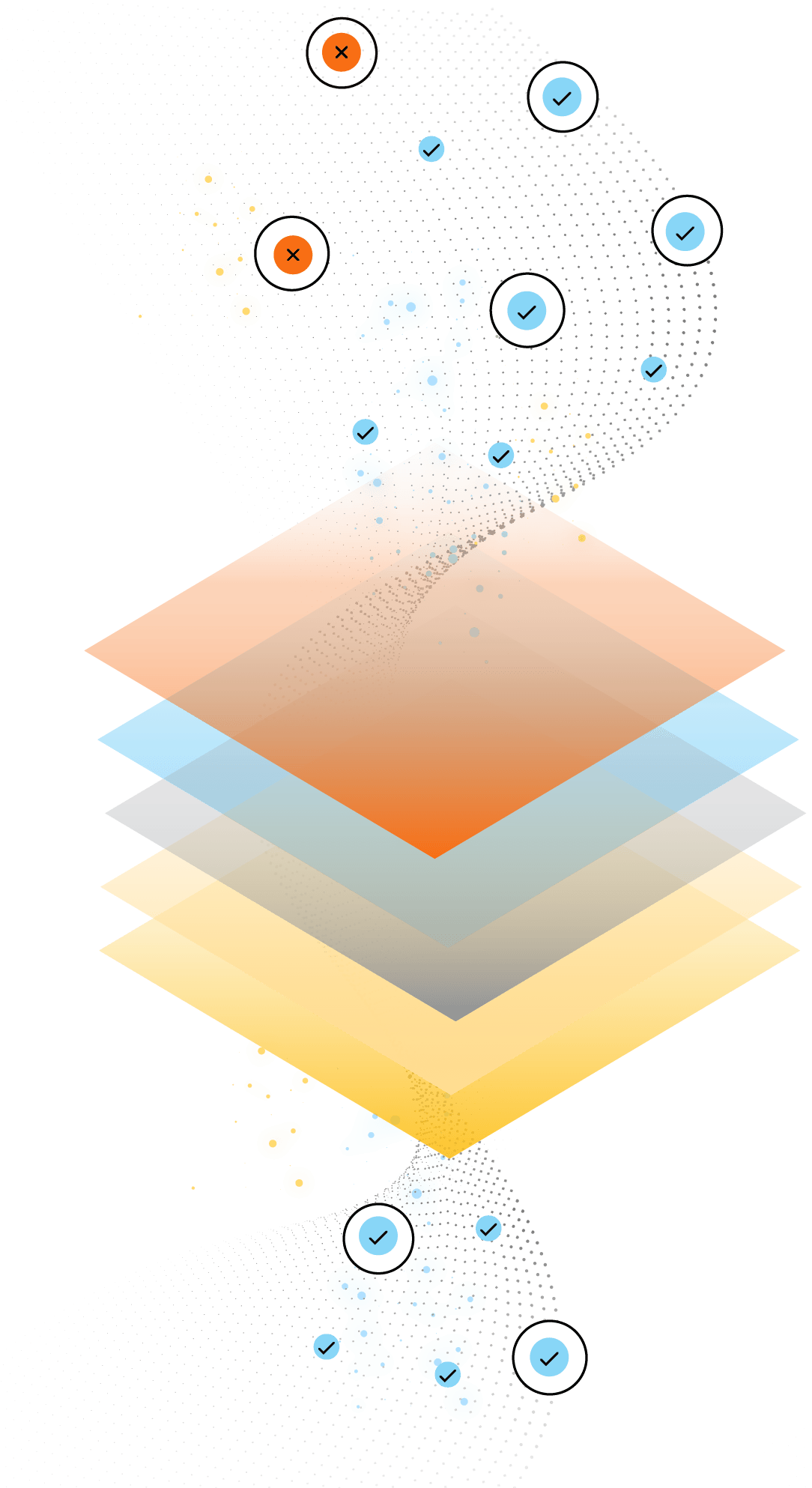
What we’ve seen consistently from customers and Glasswing CISOs is that AI attacks go through identities. They exploit trust relationships, move laterally, and escalate privileges until they own the environment. That’s why identity is both the primary attack surface and the last reliable control point.
IGA is too static
It was built for governance, not machine-speed attack chains that adapt in real time
Traditional PAM is too narrow
It secures only a limited set of accounts
ITDR is too slow and reactive
It operates after suspicious behavior has already begun
Organizations that stop AI-powered attacks have one thing in common:
Runtime Identity Controls
AI-powered attacks move through identities laterally, at machine speed, before detection fires. The only place they can be stopped is inline, at the moment of authentication.
Why runtime Identity Security is critical in the frontier AI era
Identity is the last reliable enforcement point before an action is executed. Once access is granted, the attacker is already operating inside the environment. This is why Runtime Identity Security becomes critical in the age of AI-powered attacks. The only place attacks can reliably be stopped is inline, at the moment an authentication request occurs—before access is granted.
- Control happens inline—inside the authentication flow
- Decisions are made before access is granted
- Lateral movement and privilege escalation stops in real time
Silverfort's Runtime Access Protection
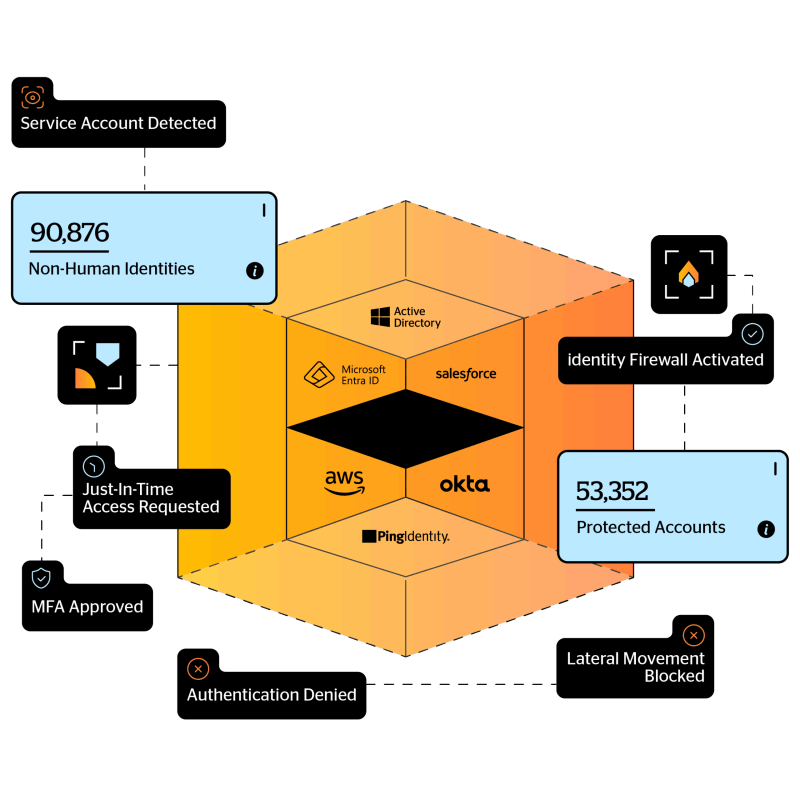
Silverfort connects to your IAM infrastructure and agentic platforms, extending identity protection to assets that were previously unprotectable, with no changes to your infrastructure, systems, or apps.
Silverfort achieves this with its patented Runtime Access Protection™ (RAP) technology, which natively integrates with your IAM infrastructure to enforce security controls at runtime and stop threats before they can cause damage.

Inline protection forevery identity
Protect human users, service accounts and other non-human identities, and AI agents with controls enforced inline at authentication.

Stop AI-speed attacks before they spread
Block, challenge, restrict, or contain risky access before attackers can move laterally, escalate privileges, or expand blast radius.

Contain and break the attack chain
Prevent the advance by challenging access based on static credentials, temporarily breaking the trust imposed by other systems.

Coverage where attackers move
Extend controls to areas most identity tools cannot reach, including AD, Kerberos, NTLM, legacy apps, OT and air-gapped environments.

"Silverfort is phenomenal. It blocked Mythos' attempts to spread in the network. At some point, we had to disable Silverfort's defenses to allow further testing."
— Security operations leader