
The AI Agent Security Guide:
How to control your agents at runtime
AI agents are your most powerful—and least controlled—identities. They act across your environment at machine speed, and so do the adversaries targeting them. But traditional IAM, PAM, and monitoring tools weren't built for this. If you're looking for a practical framework to gain visibility, enforce accountability, and protect every agent at runtime, get The AI Agent Security Guide here:
How fast is AI agent adoption growing and what does that mean for security?
1.3B
1.3 billion agents are predicted to be deployed across enterprise environments by 2028.
40%
2 in 5 enterprise applications will feature task-specific AI agents by the end of 2026.
25%
A quarter of breaches will involve AI agent abuse by 2028.
Inside the guide
What you'll learn: A practical framework for AI agent Identity security
- Why AI agents are the new "super-users" and why your current tools can't govern them.
- The four identity control failures agents introduce: shadow agents, accountability voids, over-privileged access, and lifecycle gaps.
- Why static IAM, PAM, and observability tools fall short at machine speed.
- The dual risk: why the same identity failures that create internal control gaps also make your agents ready-made entry points for AI-powered attackers.
- Four principles of identity-first AI agent security.
- A reference architecture: input, context, and enforcement layers.
- A four-step practical roadmap to securing agents without blocking innovation.
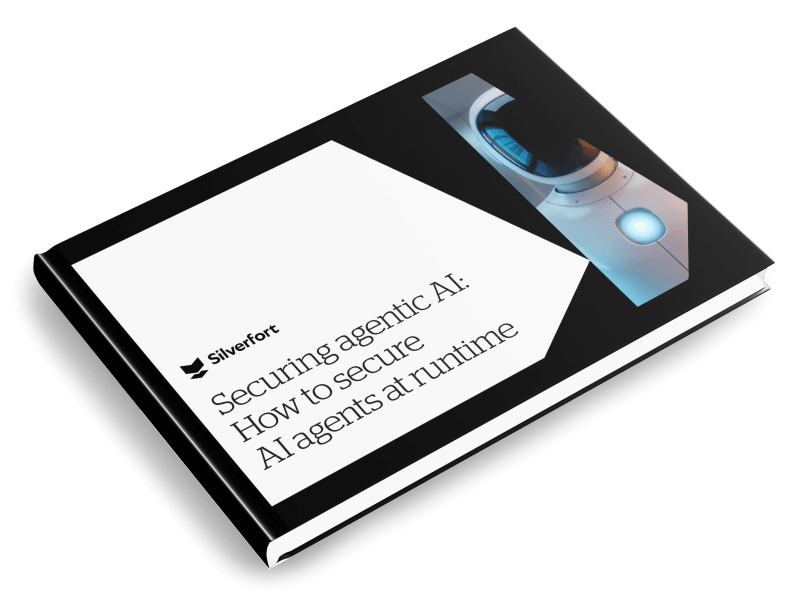
Your agents are acting. Your controls aren't.
AI agents don't fit the human identity model or the non-human identity model. They operate autonomously, carry broad access, and execute multi-step workflows at a speed no policy written at admin time can keep up with.
Most organizations discover they have far more agents than they thought, with unclear ownership, over-permissioned service accounts, and no runtime enforcement at the moment of action. In these conditions, every agent can become both a powerful operator and a ready-made attack surface.
Understanding how to secure AI agents requires a different mental model: one built around runtime identity control, not perimeter defense.
What does a complete AI agent security strategy look like?
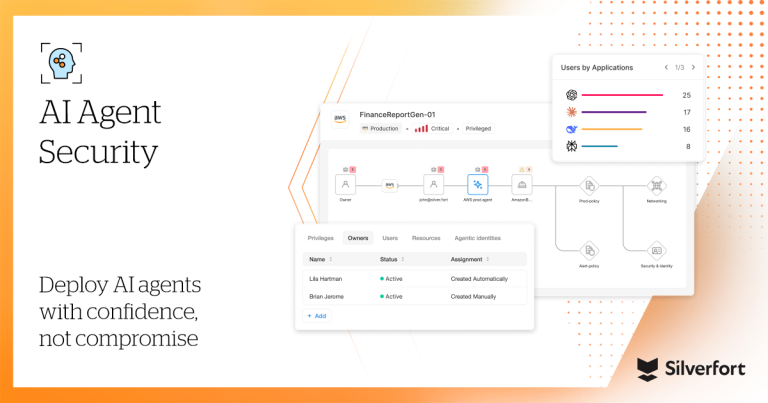
Secure every identity—from workforce users to service accounts to AI agents—with a unified, runtime control plane that discovers agents automatically, maps them to human owners, and enforces policy before any action executes. Because when adversaries move at machine speed, your defenses have to as well.
FAQs
Why do traditional IAM and PAM tools fall short for AI agents?
Traditional IAM and PAM tools rely on static policies written at admin time. AI agents make thousands of access decisions per hour, often across multiple platforms simultaneously. By the time a static rule is written, reviewed, and enforced, the agent has already acted. Securing AI agents requires a dynamic, runtime enforcement layer that evaluates identity, intent, and context at the moment of action.